


The Fisher Books: Unraveling a Mystery

Updated: Aug 10

Two years ago, I encountered a set of twelve tattered notebooks on a table in the corner of my high school orchestra room. The pages were brown and had begun to crumble in places, leaving behind little flakes of disintegrating paper when picked up or turned too quickly. I was intrigued–and nervous.
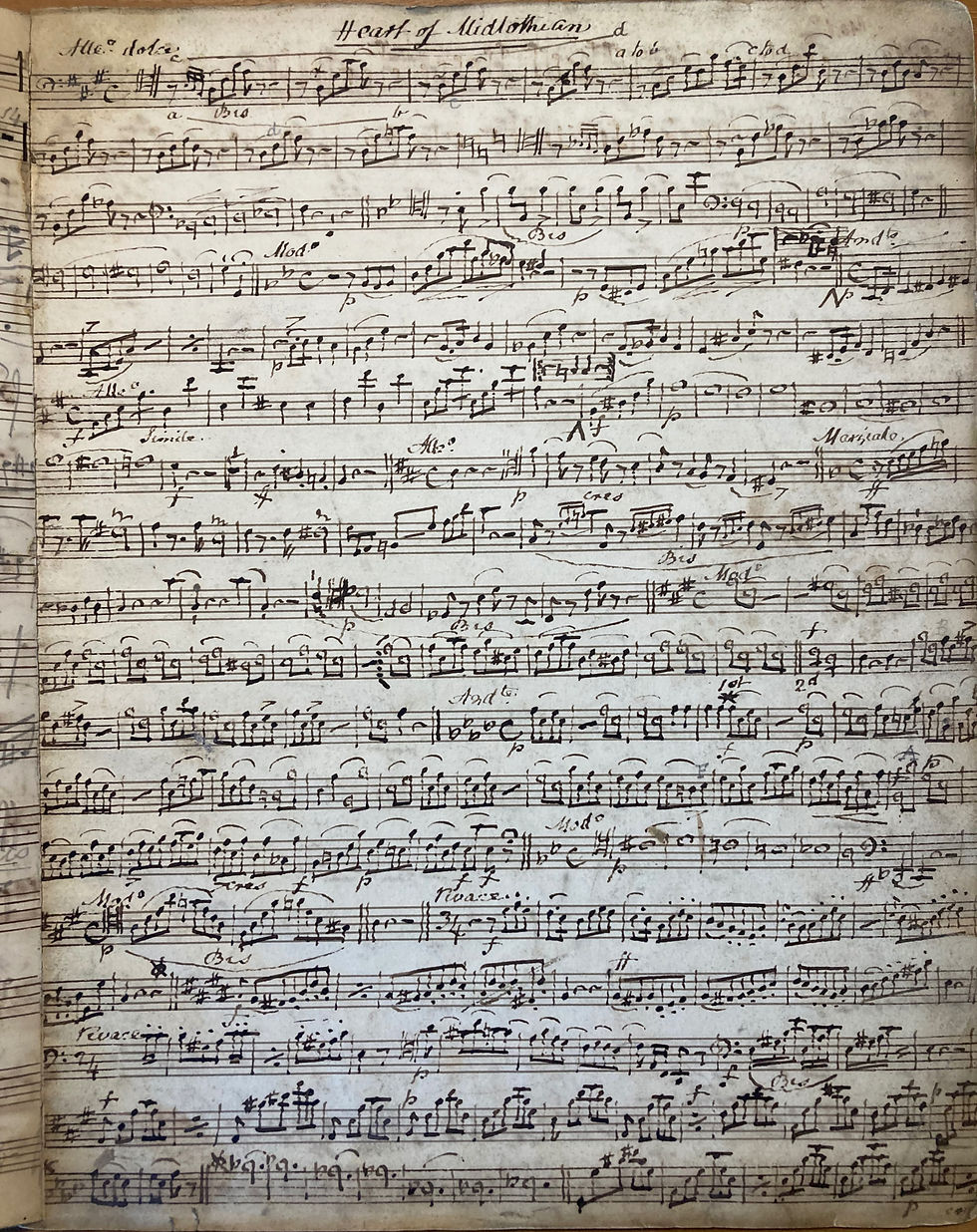
I felt like I was stepping back in time, and I didn’t want to stop. Each page was filled edge-to-edge with hand-copied music, and the ink, once black, had faded to a dark brown color. Whoever had written this book had done so with meticulous attention to detail, filling every square inch with music and notes, correcting every notational error, no matter how small.
The music inside included

excerpts from popular classical tunes of the day, ranging from orchestral parts for symphonies to operas, chamber pieces, and concertos. Nestled between the pages were clues left behind by the books’ owners: a few fragments of old letters folded into strips and used as bookmarks, a page from an old magazine advertising women’s dresses and handheld fans, some music theory practice sheets with sketches of chord progressions and doodles of faces in the margins.
The First Mystery: Missing Persons

For weeks, I returned to these books, even after my teacher had moved them into storage for safekeeping. Every time I picked them up, I found something new and interesting in their pages. I desperately wanted to know where they came from and who they had belonged to.

And so the game was afoot, and I started collecting clues. I noticed a name that appeared frequently throughout the books —“Chas. Fisher Senr.”— often with a date and an address, placed at the end of pieces. The dates ranged from 1841 to 1862 and included locations from all over Scotland and Southeast England.

I made a list and put everything into rough chronological order, then attempted to connect the dots. After a few initial Google searches that yielded little, I turned to Ancestry.com. Using the record search feature, I plugged in the names and dates that I’d found and began sifting. I combed through census data, birth and marriage records, postal directories—anything that seemed relevant to learning about Charles Fisher and placing him in context.
My system was trial and error. One record led to the next until it didn’t. And I started again. I sorted through a dozen Charles Fishers before I found my Charles Fisher—the one whose timeline could be traced through the available records and aligned with my list of dates and addresses from the books. Slowly, a biography began to take shape.

Charles Fisher Sr. was born in 1792 into a family of talented musicians, theatre managers, and actors who owned and operated the Fisher and Scraggs Theatre Company, running a circuit of about 13 theatres in the Norfolk and Suffolk area of England. The company closed in 1844 after operating for about 50 years and was apparently well known: I was able to find a number of sources on the family, including books, articles, and even Wikipedia pages.
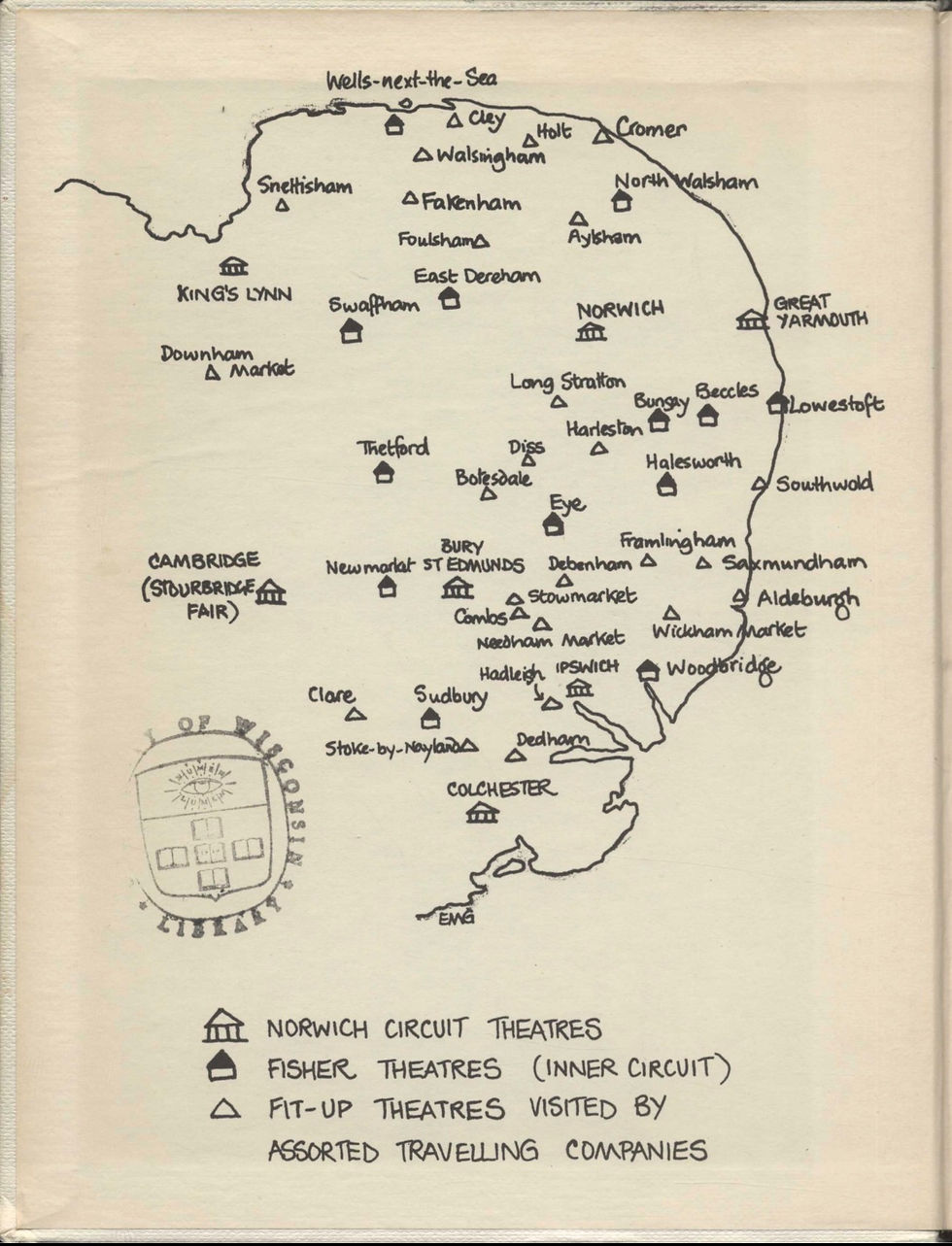
In the early 1850s, Charles moved to Glasgow, Scotland, and it was there that he began filling up the notebooks that I was examining. I learned from census records and postal directories that Charles was working as an artist and musician in local theatres and living just a couple of blocks away from the local Theatre Royal and the Royal Conservatoire of Scotland. The books contain excerpts from popular music—the same type of pieces and orchestration that would have been performed as part of the Fisher company’s productions before the circuit closed. It’s possible that Charles was working on new productions–and equally possible the notebooks were simply used for home entertainment.
The last date written in Charles’s notebooks was 1864, and he died in 1869. I had learned so much about the person who created these notebooks 160 years ago, but how did they get from his home in Glasgow to my high school in Middleton, Wisconsin?

The Second Mystery: Provenance
A few months after I encountered the Fisher books, I began helping my orchestra teacher, Steve Kurr, with an evening music history class that he ran for members of the community. It was at this time that I met Martha Maxwell, a student in the class and the person who generously donated these books to my high school.
When we were introduced for the first time, I told her all about my detective work up to that point and asked what she knew about where Charles Fisher’s notebooks had come from. I learned that Martha’s mother had found them after an attic fire in the home of relatives, the C.E. Preveys in Lincoln, Nebraska. She saved them thinking that Martha, a young cellist, might find them interesting one day. Beyond that, Martha knew little about where they had come from.
It turns out I was trying to understand the “provenance” of these books, though I didn’t know that term at the time. I learned that provenance meant not only who owned the books and wrote in them (Charles, I now knew), but also who owned them afterwards and how, for instance, a bunch of 19th-century music manuscripts from England and Scotland ended up in an attic in the middle of the United States.
Martha gave me a few details about the house in Lincoln and the people who had lived there, and I returned to the books, vastly more confused than when I had begun. Now I knew how they had ended up in Wisconsin, but if the Fishers were in Europe, who brought all of these books to Nebraska? And why? I had two ends of the timeline with a large, gaping, 100-year hole in the middle.
At the same time, I was preparing for high school graduation and the reality of leaving the books behind without answering these questions. But to my surprise, a few days before graduation, I found a note from Mr. Kurr on top of the box, gifting the books to me to keep and continue studying.

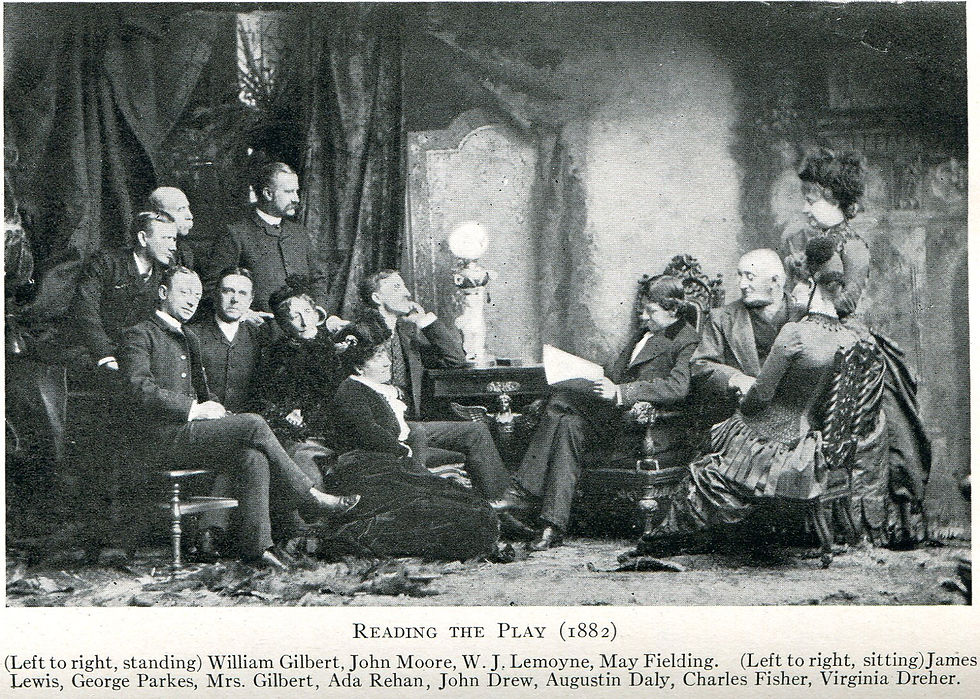
I did just that, and using what Martha had told me in conjunction with what I knew of the Fisher family timeline, I turned back to Ancestry census data and visited the stacks at Memorial Library for answers. One summer day, it all clicked. Sitting in a carrel in Memorial Library, I came across a familiar name in an obituary. Josephine Fisher Shaw, New York actor and widow of Charles Fisher Jr. , had moved to Nebraska after her husband passed away in 1891 and lived in the house where Martha’s family found the books. Josephine’s obituary in the Lincoln Journal Star on December 31, 1954, included a quote from the actress herself explaining that she “moved to Lincoln because it was an ‘intellectual town … it (Lincoln) is a little bit old style; it is not so new that it is shiny.’”
A year after I first saw these books in the corner of the orchestra room, their timeline was more or less complete, yet the mystery lived on. The search to answer one or two simple questions had become a complex mystery that left me with more questions than answers.
Now, two years later, I keep returning to the Fisher books. The questions I still have linger in the back of my mind and continue to be contextualized by the experiences I have as a second-year Music Education and History major in college.

When I first showed the books to Professor Joshua Calhoun, Co-Director of Holding History and my instructor for a Shakespeare class I took in my first year, he immediately picked them up, held them to the light, and discovered watermarks in the paper—something I had never thought to look for.

I was surprised to see invisible dates glowing through the paper but not surprised to learn that there were more mysteries to pursue within these books. Looking back on where I’d begun with them, I had travelled the world, from Nebraska to Glasgow, all through these forgotten and seemingly inconsequential tattered green notebooks. New stories kept arising, drawing me in and leading me from one place to the next, and that’s what this digital essay series, Old Books, New Stories, is all about.
About the Author & Project
Madelyn Watson is curious about all things archives, history, and music. As a double major in Music Education and History with a certificate in Medieval Studies, she hopes to give voice to the stories found in old books and share the experience of working in the archives with the community.
Next in the Series: “Sawdust and Spangles: An 8th-Grader’s Scrapbook of the Historymobile”
The Wisconsin State Historical Society’s Historymobile was an annual staple of Wisconsin life in the 1950s, 60s, and 70s. See it through the eyes of Bernard James Tschudy of New Glarus.
Thanks to the UW-Madison Sophomore Research Fellowship for funding this series, to Professor Joshua Calhoun (English Department) and Holding History, and to Steve Kurr and Martha Maxwell for their insight and help with this project.


Very wonderful publication!